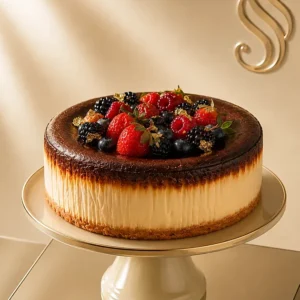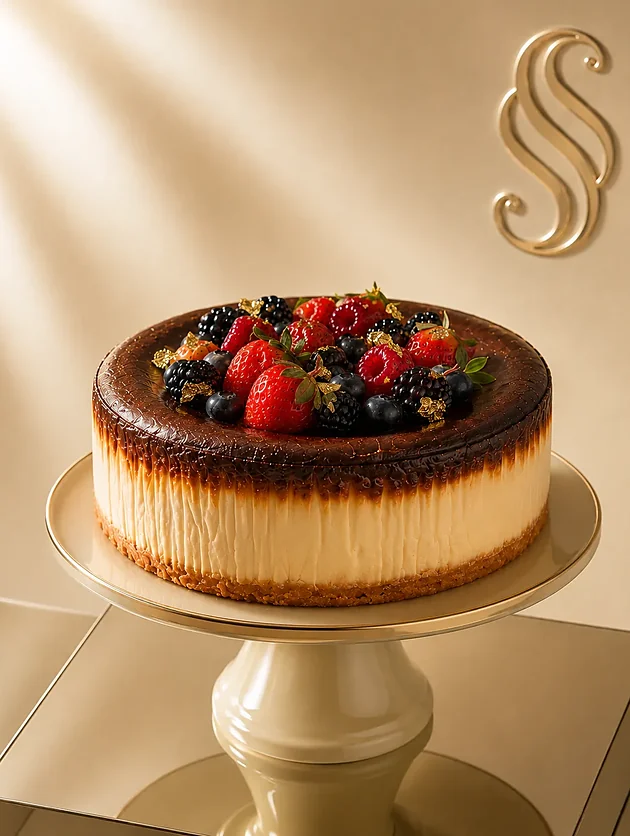

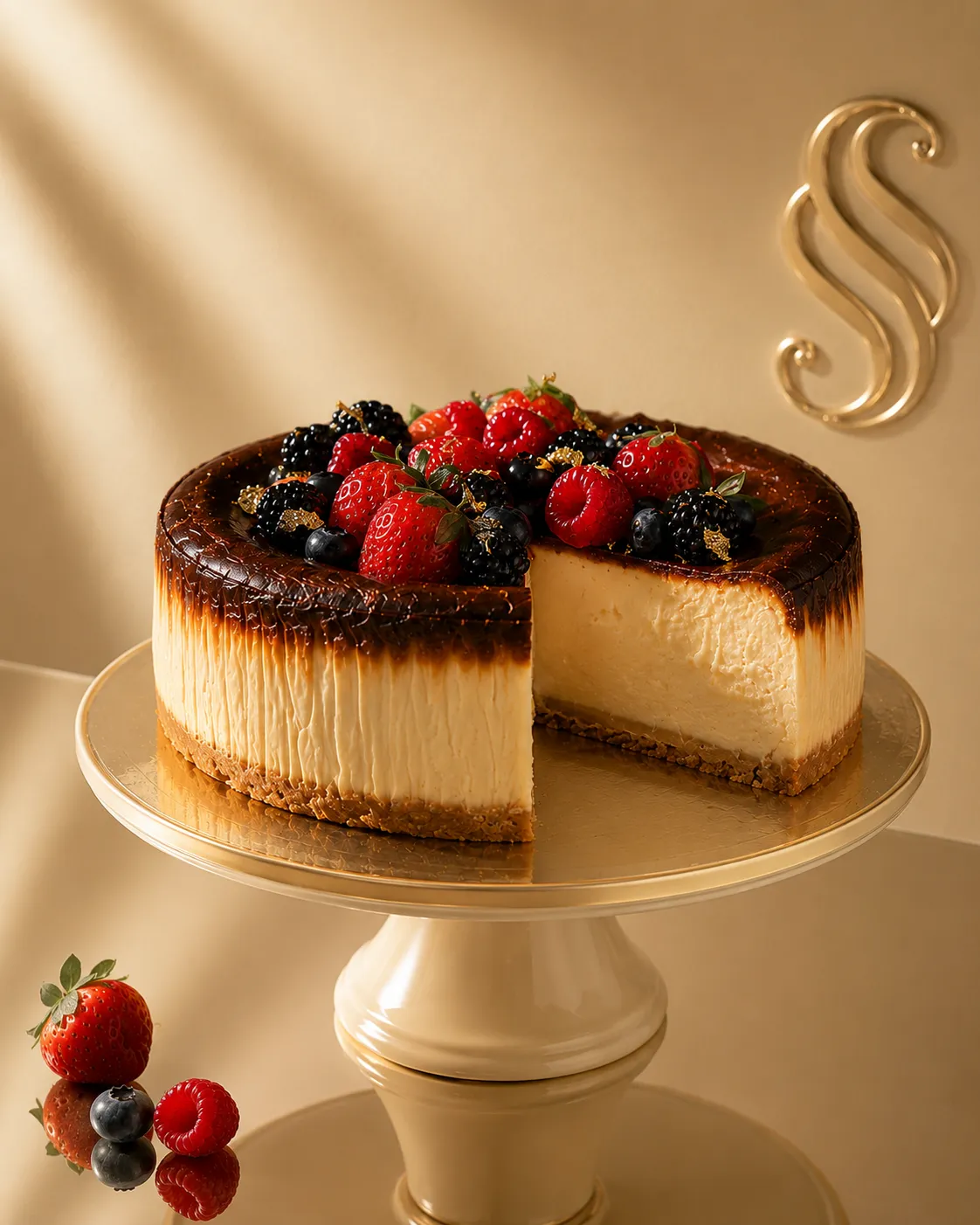
The primary difference between these two popular desserts lies entirely in their baking technique, texture, and the presence of a crust. A regular cheesecake features a pressed biscuit base, a pale surface, and a firm, structured filling baked slowly in a water bath. In contrast, a Basque version is baked without a crust at a remarkably high temperature. This creates a deeply caramelised exterior and a soft, custard-like centre. If you are comparing Basque cheesecake vs regular cheesecake, your choice ultimately comes down to whether you prefer a neat, classic slice or a rustic, textural contrast.
Understanding how these two styles developed, how they are baked, and how they should be served will help you choose the right pastry for your next gathering.
Understanding the Origins of Basque Cheesecake
Basque cheesecake originated in the 1990s at La Viña, a pintxos bar in the resort town of San Sebastian, Spain. The creator, chef Santiago Rivera, wanted to add a baked cake to his menu and began experimenting with cream cheese. He eventually developed a recipe that intentionally broke almost every conventional rule of traditional pastry making.
Instead of carefully pressing a graham cracker or digestive biscuit crust into a springform pan, the pan is simply lined with crumpled parchment paper. Rather than gently baking the batter in a protective water bath to prevent cracking, the cake is subjected to intense heat. The result is a dessert that rises dramatically in the oven before collapsing into a dense, rustic shape as it cools.
Because it lacks a rigid crust, the parchment paper leaves distinctive folds and creases along the edges of the cake. This gives every bake a unique, artisanal appearance that stands in stark contrast to the perfectly smooth sides of a standard bakery cake.
How the San Sebastian Style Differs from New York Cheesecake
When people refer to a regular cheesecake, they are most often thinking of the famous New York style. The contrast between Basque and New York styles highlights two completely different approaches to working with dairy and eggs.
A New York-style cheesecake is heavy, dense, and exceptionally rich. The batter usually relies on a large volume of cream cheese mixed with heavy cream or sour cream to provide a slight tangy note. Bakers go to great lengths to keep the top of a New York cheesecake perfectly pale and smooth. They achieve this by baking the cake at a low temperature, often placing the cake tin inside a larger roasting pan filled with boiling water. This water bath produces steam, which insulates the delicate batter and ensures it cooks evenly from edge to centre without cracking or browning.
A Basque cheesecake eliminates the water bath and the low temperature. By baking the batter in a very hot oven, the exterior cooks rapidly while the centre remains soft and slightly fluid. While a New York cheesecake offers a uniform, solid density from the first bite to the last, a Basque cheesecake provides a gradient of textures. The edges are firm and cake-like, while the middle is loose and exceptionally creamy.
Comparing Texture, Flavour and Visual Appeal
To understand exactly how these desserts differ, it is helpful to compare their physical characteristics side by side.
| Feature | Regular (New York-Style) | Basque (San Sebastian-Style) |
| Appearance | Pale top, smooth sides, neat edges. | Dark brown top, rustic edges with parchment creases. |
| Crust | Pressed biscuit, graham cracker, or pastry base. | Completely crustless. |
| Texture | Uniformly dense, firm, and heavy throughout. | Firm edges with a soft, custard-like, flowing centre. |
| Flavour | Sweet, tangy, rich, often accented with citrus or vanilla. | Toasted, caramelised, sweet cream cheese with slightly bitter notes. |
| Baking Method | Low heat, slow bake, often requires a water bath. | High heat, fast bake, no water bath. |
The Secret Behind the Caramelised Dark Top
One of the most common questions from first-time buyers is why the top of the dessert looks so dark. It is important to clarify that a properly executed Basque cheesecake is deeply caramelised, not carbonised or ruined.
The dark surface is the result of the Maillard reaction. This is a chemical process where proteins and sugars transform under high heat, creating complex new flavour compounds. When the cream cheese and sugar in the batter are exposed to a hot oven, the surface rapidly toasts and turns a deep mahogany brown.
This dark exterior is crucial to the overall flavour profile. The intense, slightly bitter notes of the toasted top perfectly balance the rich, sweet creaminess of the interior. Without this dark top, the dessert would simply taste like a bowl of sweetened cream cheese. The caramelised surface essentially acts as the crust, providing a distinct flavour boundary that makes every bite interesting.
Choosing the Right Dessert for Your Occasion
Selecting the right dessert depends entirely on the occasion, your presentation requirements, and the specific flavour preferences of your guests.
If you are hosting a formal event and need a dessert that slices perfectly cleanly, a traditional New York-style cake is a reliable choice. Its firm structure holds up well on a dessert buffet, and its mild flavour pairs beautifully with fresh fruit compotes, chocolate sauces, or whipped cream. It is a traditional staple among formal celebration cakes because of its pristine appearance and universal appeal.
However, if you are looking for a dessert that serves as a conversation starter, the rustic charm of the San Sebastian style is unmatched. Its complex, toasted flavour requires no additional sauces or garnishes. It is best enjoyed exactly as it is, making it a sophisticated but unfussy option for dinner parties or weekend gatherings. For those who prefer smaller treats, many bakeries also offer individual portions of various styles alongside their everyday desserts, allowing you to sample the texture before committing to a whole cake.
How to Store and Serve Your Cheesecake Perfectly
Serving this dessert correctly is essential to experiencing its intended texture. Because it contains a high volume of dairy and lacks a supportive crust, proper handling and temperature control are necessary.
First, the cake must be thoroughly chilled after baking so that the soft centre sets enough to be sliced. However, you should never eat it straight out of the refrigerator. Cold temperatures mute the complex caramel flavours and cause the soft centre to seize up and feel overly firm.
To enjoy the best creamy cheesecake Singapore has to offer, you must let it rest. Take the cake out of the refrigerator and leave it at room temperature for 20 to 25 minutes before serving. This brief resting period takes the chill off the dairy, allowing the centre to soften into its signature custard-like consistency so the textures come through fully.
When it is time to serve, use a sharp, thin knife heated under hot running water and wiped dry. The hot blade will glide through the sticky, caramelised top and the soft interior, giving you a clean slice without tearing the delicate centre. If you are arranging a gathering, reviewing your bakery’s purchase and delivery guidelines ensures your cake arrives with plenty of time to be properly chilled and then rested before your guests arrive.
Experience Authentic San Sebastian Cheesecake in Singapore
For dessert lovers looking for an authentic San Sebastian cheesecake Singapore experience, finding a bakery that respects the traditional high-heat method is key. Savour Society crafts its San Sebastian Cheesecake using premium ingredients, ensuring the delicate balance between the deeply toasted exterior and the soft, rich interior is perfectly maintained.
Baked fresh to order in a Michelin-trained kitchen, the cake captures the rustic, artisanal spirit of the original Spanish recipe. It is available as a whole cake for larger gatherings or as individual slices for personal indulgence. By avoiding preservatives and focusing purely on the quality of the dairy and the precision of the bake, this dessert delivers the exact textural contrast that made the style famous worldwide.
Finding Your Perfect Slice
Both regular and Basque cheesecakes offer brilliant ways to enjoy rich dairy desserts, but they cater to entirely different moods. A traditional, crust-based cake delivers neat, dense comfort, while the high-heat San Sebastian approach offers a rustic, complex, and highly textural experience. By understanding the distinct baking methods, flavours, and serving requirements of each, you can confidently choose the perfect option to complete your next meal or celebration.
Frequently Asked Questions
What exactly goes into the batter of this Spanish dessert?
It relies on a remarkably simple mixture of full-fat cream cheese, heavy cream, sugar, and eggs, alongside a very small amount of flour or cornstarch to help bind the loose centre together.
Is the dark surface burnt?
It is deeply caramelised rather than carbonised. The intense oven heat rapidly toasts the exterior sugars, creating a complex, slightly bitter profile that balances the rich interior without tasting like ash.
Does the San Sebastian style have a crust?
No, it is entirely crustless. Bakers pour the batter directly into a pan lined with crumpled parchment paper, allowing the toasted exterior to naturally form the outer boundary.
Comparing it to a New York slice, which one is sweeter?
A traditional New York bake generally tastes sweeter and tangier. The high-heat Spanish version features toasted notes from its dark top that cut through the dairy, making the overall profile feel less sugary and much more balanced.
How long do these crustless bakes last in the fridge?
Because premium versions lack preservatives and rely heavily on fresh dairy, they are highly perishable. Keep them refrigerated in an airtight container and aim to finish them within two to three days.
Can you freeze a molten-centre cheesecake?
While technically possible, freezing alters the delicate, custard-like texture of the middle. For the absolute best mouthfeel and flavour contrast, it is highly recommended to enjoy it fresh.
What is the best way to slice through the soft middle cleanly?
Run a sharp, thin-bladed knife under very hot water, wipe it completely dry with a towel, and press it gently through the dessert. Clean and reheat the blade between every single cut to prevent the gooey centre from tearing.
Should you serve it straight from the refrigerator?
No. To experience the intended texture, you must let it rest at room temperature for 20 to 25 minutes before eating. This brief resting period softens the chilled dairy, unlocking the signature flowing consistency.